
Blog
News, projects and architectural ideas
May 12, 2026
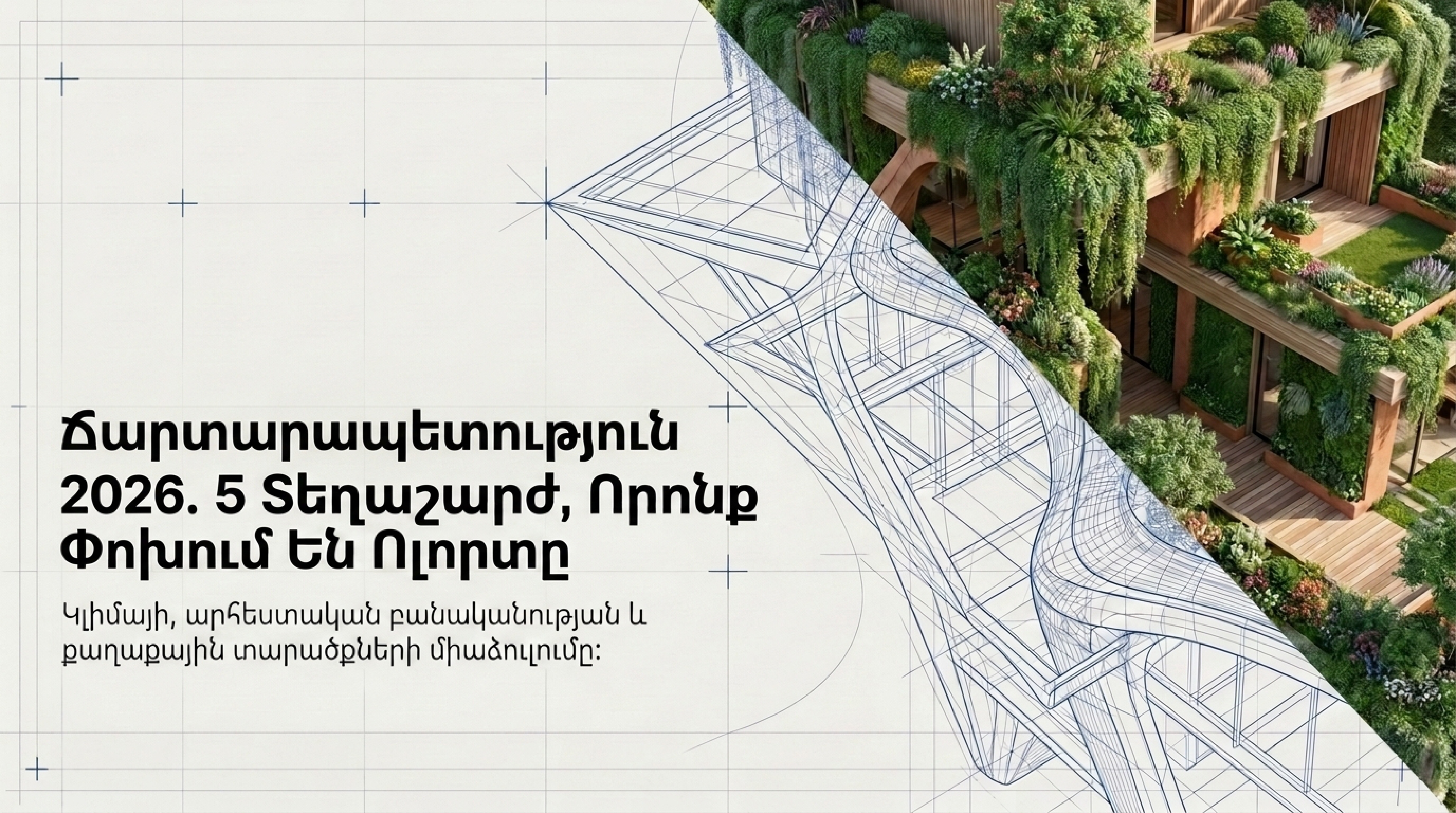
Architecture 2026: Five shifts changing the profession
May 2026 finds the industry at a convergence point — where the climate imperative, artificial intelligence, and a fundamental rethinking of urban space are merging into a single vector. Here is what is happening right now, and why it matters for everyone who builds and lives. Every architectural cycle begins with a question the profession cannot avoid. In 2026, that question is: how do we create buildings that don't merely exist, but actively participate in the life of a city, a climate, and a person? The answer is unfolding across several fronts simultaneously — and none of them are theory anymore. These are real projects, real materials, real tools. 1. Climate-Adaptive Facades: Buildings That Breathe Parametric architecture is no longer the privilege of large international firms. Studios in Lagos, Seoul, São Paulo, and Stockholm are using parametric tools to generate context-responsive buildings at a pace that would have seemed absurd five years ago. Kadva Corp One of the most significant shifts is the emergence of kinetic facade systems — exteriors that respond in real time to solar gain, wind direction, and humidity, with environmental sensors embedded directly into facade panels. These are not concepts. They are built commercial projects. Investment in building energy efficiency reached $250 billion in 2026 — a figure that makes clear green construction has moved from a niche concern to the dominant market direction. QZY Models 2. Biophilic Design: From Concept to Neuroscience Potted plants in the lobby are a distant memory. Biophilic design has evolved from visual imitation of nature to a data-driven approach rooted in neuroscience: researchers now map how textures, light, and spatial geometry influence human cognition and emotion. Experiments include kinetic walls that simulate natural light rhythms and multisensory environments integrating scent and sound to foster relaxation and focus. IEREK In 2026, the question is no longer whether biophilia improves wellbeing — that is established. The question is precisely how, and to what degree. Buildings are acquiring living walls and roofs: entire facades covered in vegetation that simultaneously insulates the structure, purifies the air, and supports biodiversity. Offices implementing biophilic principles see productivity gains of up to 15% and lower rates of absenteeism. QZY Models 3. Artificial Intelligence as Co-Author Leading architecture schools are restructuring their programs around integrated AI and machine learning literacy — not as electives, but as core competencies embedded across studios and technical courses. This means that within five to seven years, a generation of architects will enter the market for whom collaboration with AI is standard practice, not an experiment. Kadva Corp Already today, BIM software, parametric modeling, and real-time visualization tools are streamlining design processes. Smart buildings use IoT and automation to manage lighting, climate, and security — doing so far more efficiently than any conventional building management system. 4. Adaptive Reuse: The Best Material Is the One Already There Demolition and new construction are giving way to the reimagination of existing structures. The reason is straightforward: reusing existing buildings lowers embodied carbon by over 40%, preserves heritage, and supports a circular economy. QZY Models Designing for deconstruction, material passports, and adaptive reuse are now part of the standard vocabulary at schools from the AA in London to IIT in Chicago. This fundamentally changes how a brief is approached from the outset: a building must be designed not only for its operational life, but for future disassembly and the second life of its materials. Kadva Corp 5. Personalisation: The End of Architecture for Everyone Through 2025, minimalism gave way to more expressive interiors connected to the personal histories of their owners. This wave of maximalism and craftsmanship is driven by a growing demand for emotional and authentic spaces. Geometrium School Today, clients follow not fashion but their own feelings. What genuinely matters is comfort, warmth, and status — a residence must reflect its owner. This is timeless architecture that remains relevant regardless of shifting design currents. Alongside this, a new appreciation for natural palettes and organic forms is emerging: buildings with flowing contours and elongated proportions that create a sense of unity with the surrounding landscape. Studia 54 What This Means for Us These five directions are not isolated trends — they are facets of a single broader shift: architecture is becoming a discipline where ethical, environmental, and technological responsibility is inseparable from aesthetics. For Modulex, this is not an abstract thesis but a working framework. Every project, every modular solution, is ultimately a question about how a building exists within its context and what it gives to the people inside. Stay tuned to the blog — we continue to follow how the world's architectural thinking reaches us, here in Armenia and across the South Caucasus.
April 20, 2026
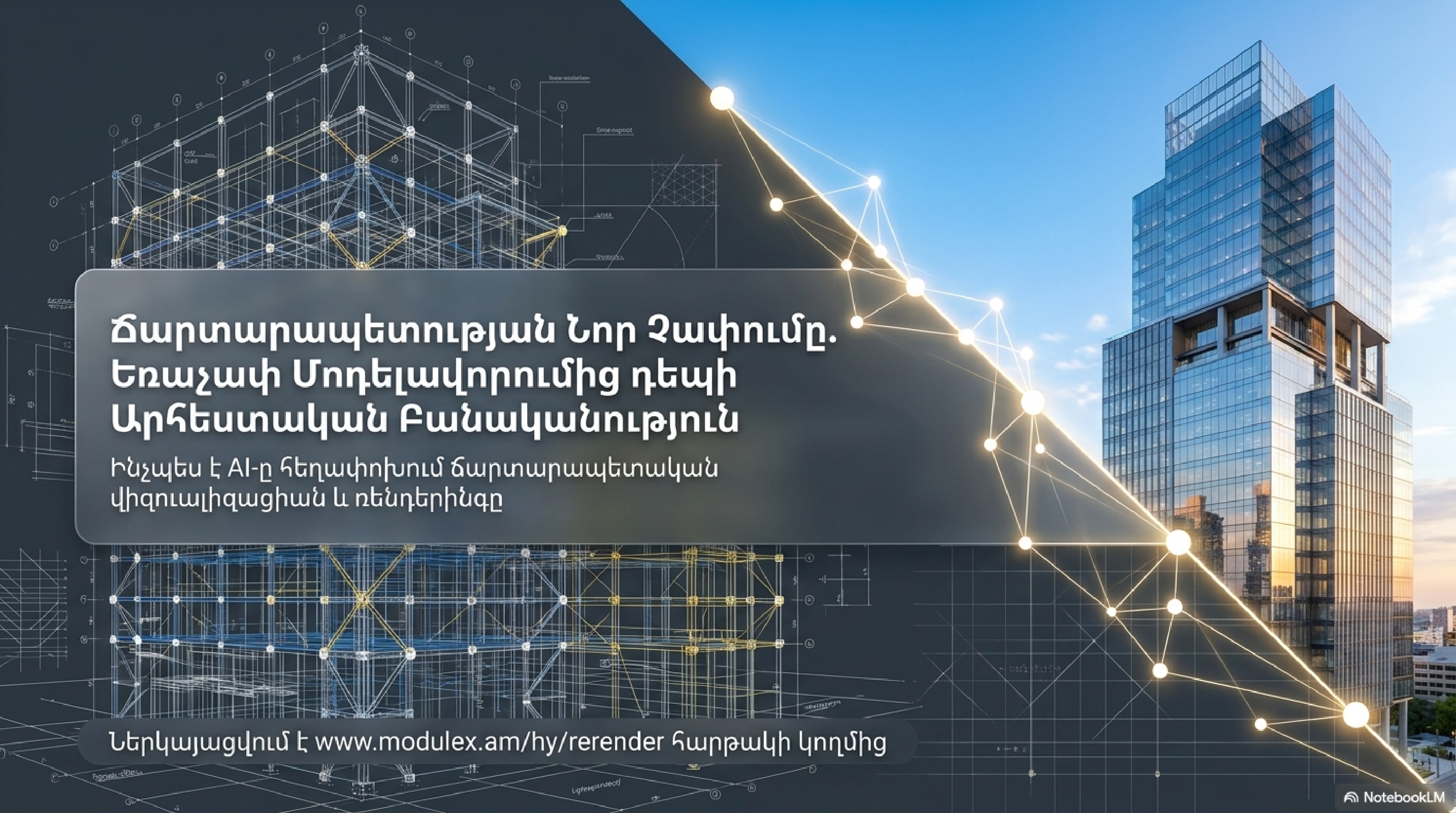
The New Dimension of Architecture: How AI Revolutionizes Visualization and Rendering
A modern 3D model is no longer just an image. It is an integrated information model (BIM) of a structure, which includes all constructions, engineering systems, and quality control data according to the construction norms of the Republic of Armenia. The vast majority of designers' resources are spent on physical accuracy, not on visual appeal. The Visualization Bottleneck Technical models are overloaded with normative data, which slows down the visualization process. Traditional rendering requires super-powerful computational resources (GPU), complex lighting setups, and a huge amount of time—often taking days or weeks. The technically perfect 3D model is ready, but presenting it to the client becomes the most costly barrier. Modulex AI Re-render: The Tool of a New Era There is a transition towards artificial intelligence, where AI models are changing the rules of the game in 3D space. Modulex AI Re-render is not just a filter, but a professional platform based on Deep Learning, created for architects, designers, and real estate developers. How does it outperform traditional methods? Speed and Technology: The AI neural network "understands" geometry and generates a photorealistic result in seconds, based on millions of pre-trained images. Preserving Precision: The AI reads architectural volumes (Edge Detection) without modifying the calculated structures and maintains the exact perspective of the 3D space and the position of details (Depth Map). Flexibility: You get unlimited style iterations. You can change the building facade materials or weather conditions during a client meeting with just one click. Accessibility: It is cloud-based and works directly via a browser, eliminating the need for highly expensive hardware. The future is already here. Focus on engineering genius, normative compliance, and safety. Leave the heavy lifting of visualization to Artificial Intelligence. Explore the platform today at www.modulex.am/hy/rerender.
April 16, 2026
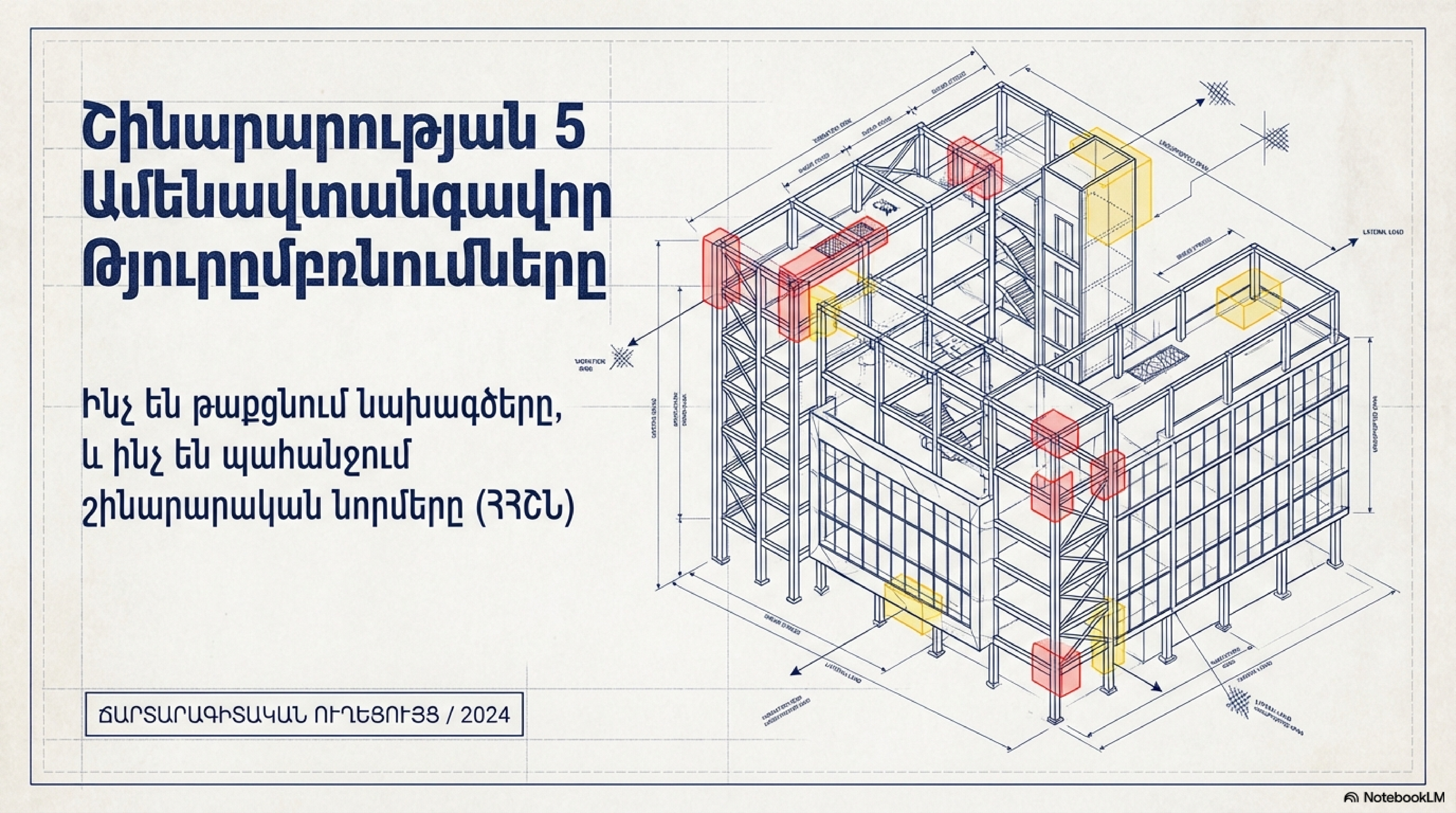
The 5 Most Dangerous Misconceptions in сonstruction: What you need to know
At first glance, construction seems to be merely a combination of brick and concrete. In reality, it is a continuous battle against gravity, water, time, and human errors. In this article, we'll discuss the 5 most dangerous misconceptions in construction and what building norms actually require. Misconception 1: "Minor design deviations are harmless" Many believe that shifting a wall slightly or changing window sizes is standard practice. In reality, there are strict, inviolable limitations: • In non-load-bearing walls, the maximum allowable deviation for door and window areas is 10%. • The deviation of the building's position from the boundary line must not exceed 5% of the planned distance (maximum 1.5 meters). Misconception 2: "The foundation just needs to reach solid ground" There is a myth that the deeper the foundation, the better. In truth, foundations are active zones. To prevent the collapse of adjacent buildings, precise ratios must be maintained. During construction, it is mandatory to prevent ground freezing and groundwater rise. Misconception 3: "Cracks are merely cosmetic" It is commonly thought that all new buildings settle and cracks are normal. However, the direction of a crack clearly diagnoses structural hazards: • Vertical cracks: Indicate uneven foundation settlement and displacements. • Transverse cracks: Indicate tensile stress, which can lead to a load capacity drop of up to 15%. • Diagonal cracks: Indicate overloading. Misconception 4: "Materials don't degrade in dry indoor environments" Concrete and steel are not eternal. Biodegradation (fungi, mold) and corrosion happen invisibly across 4 stages—starting from a thin surface layer to severe decay where over 50% of the building structures are compromised. Misconception 5: "The construction estimate is final" A good design does not guarantee exact costs with zero deviations. The law requires a contingency fund for unforeseen expenses. This money is only paid out upon the availability of performance acts and a positive conclusion from Technical Control. Summary: A building is an interconnected ecosystem. A deviation from the project alters load distribution, leading to uneven settlement and cracks. Cracks open a path for moisture, and fixing these emergencies inevitably depletes the contingency budget. Construction norms are not merely restrictions; they are the math of disaster prevention. Strict Technical Control is the only way to turn these misconceptions into a safe reality.
April 11, 2026
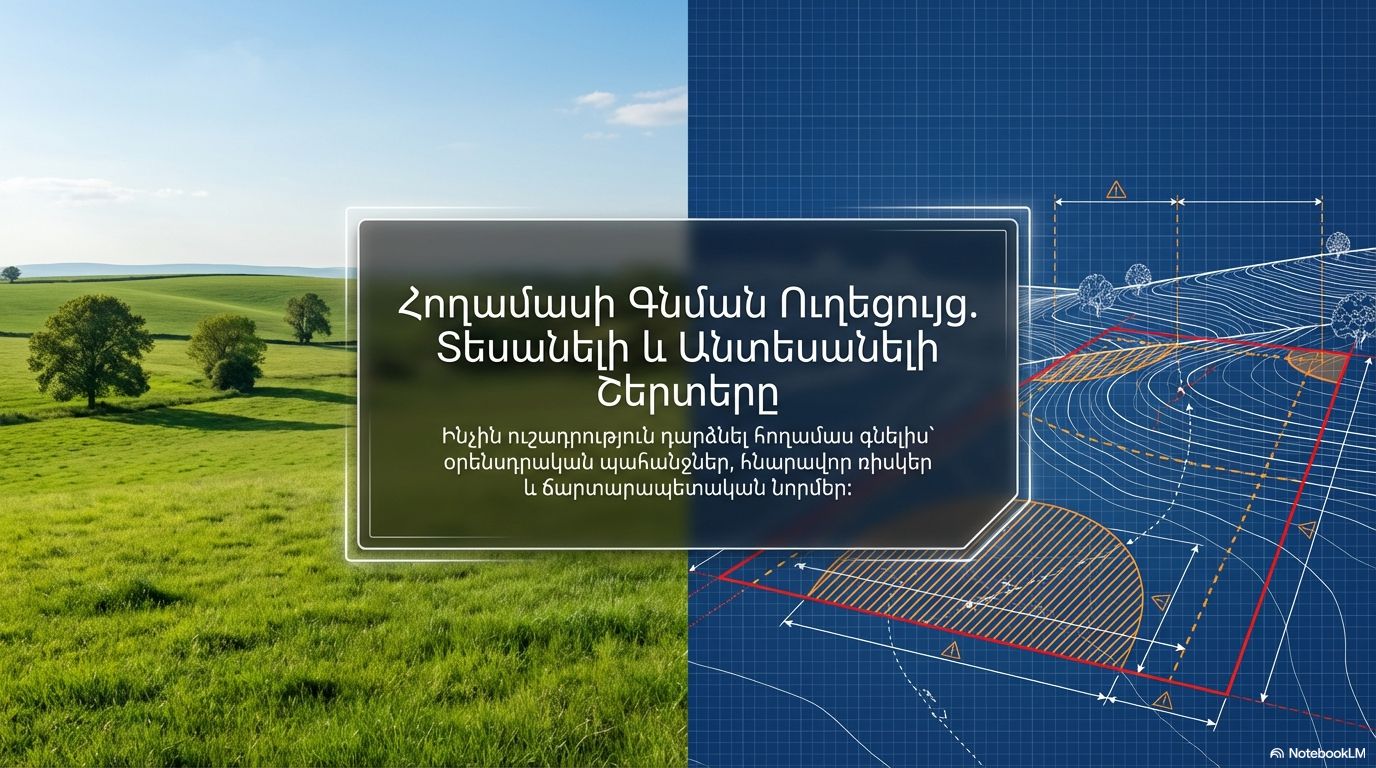
Land Acquisition Blueprint: What to Consider Before Building
At Modulex Group, we know that safe and comfortable construction starts with the right land choice. When buying land, it is necessary to pay attention to legislative requirements, potential risks, and architectural norms. Below are the three spatial levels of assessment and the most critical points. 1. MACRO Level: Natural and Geological Risks • Slopes and Seismicity: When building on slopes with an inclination of more than 15 degrees or isolated elevated platforms, the calculated value of soil seismic acceleration is multiplied by a factor of 1.2. 2. MESO Level: Invisible Legal Boundaries Surrounding objects create invisible protective radii within which residential construction is prohibited. • Sanitary Protection Zones: A distance requirement of up to 1000 meters applies to chemical storage facilities, cemeteries, and crematoriums. • Transport Highways: To protect against noise, a buffer zone of 25m to 100m is established. A mandatory 10m wide forest strip along the highway is also required. 3. MICRO Level: Internal Anatomy of the Plot • Red Lines and Distances: The permissible setback from the street is usually 3-5m. A distance of 3m must be maintained from the residential house to the plot boundary , and 1m from economic structures to the boundary. • Density and Landscaping: All impermeable areas of the plot must not exceed 40% of the total area. The remaining 60% must be landscaped. • Environmental Requirements: Completely blind or stone fences are excluded. The presence of waste sorting bins is required. Existing planting must be maximally preserved and soil erosion avoided. Fast-Track Procedure You can use the simplified procedure if: • The plot is 400 sqm or more. • The building is 300 sqm or less (or up to 400 sqm with a maximum of 3 above-ground and 1 underground floor). • The building has no commercial purpose. When to Walk Away from a Deal • Slopes without a clear geological survey. • A plot entirely within the 500m sanitary zone of factories or cemeteries. • Areas where it is impossible to maintain a 60% green surface. • Plots adjacent to highways without the possibility of a 10m forest strip. Smart Investment, Safe Future The right land choice is not just aesthetics. Following the norms guarantees safety and the reliability of the financial investment.
April 11, 2026
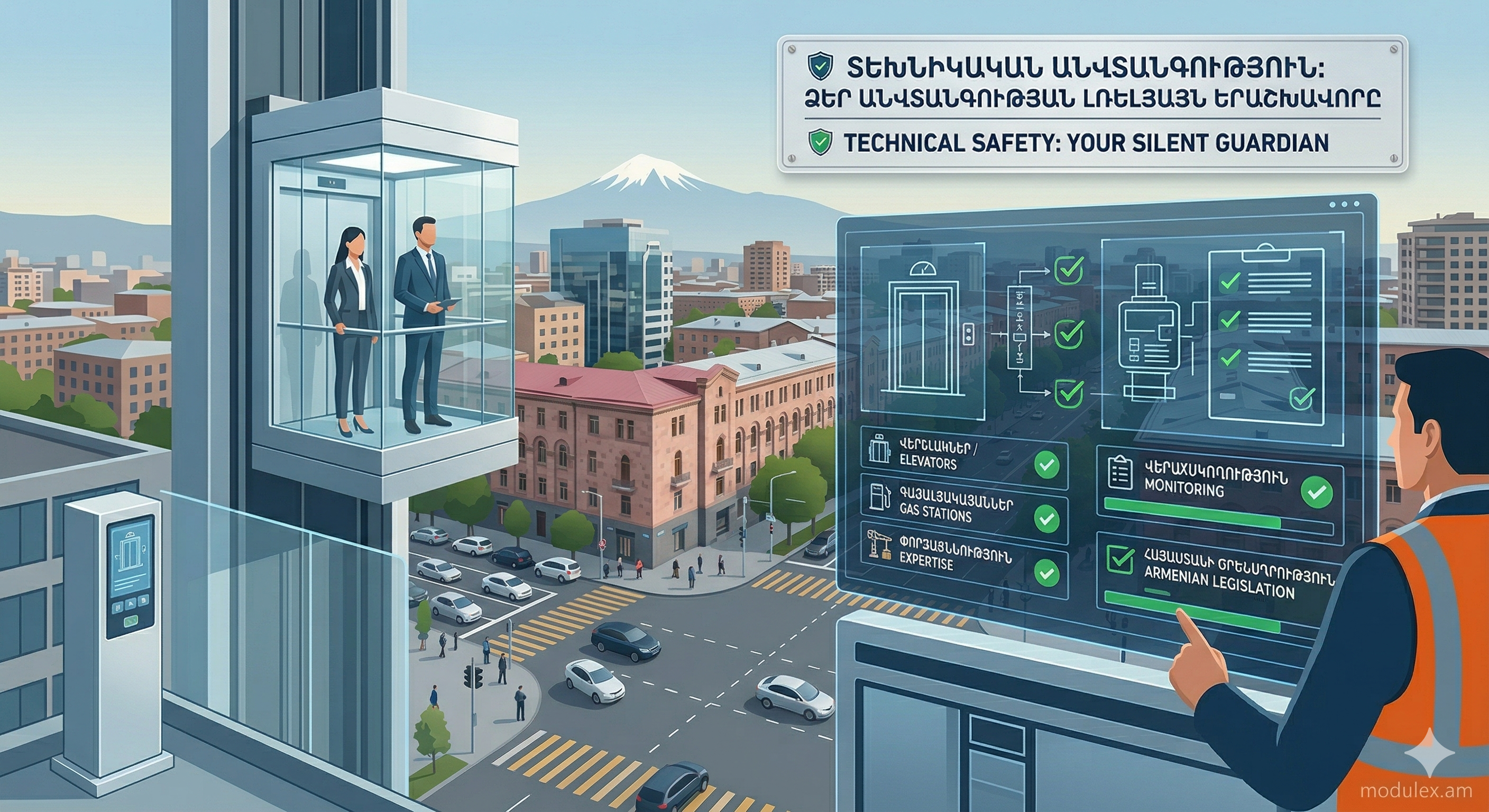
Technical Safety: Your Silent Guardian
Every day we use elevators, escalators, refill our cars at gas stations... but do we ever wonder who guarantees the safety of it all? What is Technical Safety? It is a system designed to prevent man-made disasters and protect human life and property. According to the law, hazardous objects include not only factories but also common elevators, escalators, and even cable cars. The 4 Key Stages of Safety: Design: Construction cannot begin without a safety expertise. Expertise: Independent experts inspect every single detail. Registration: The object is registered in the state registry. Monitoring: Mandatory inspections are conducted at least once a year. Staying informed is the first step toward a safer environment for everyone.
April 11, 2026
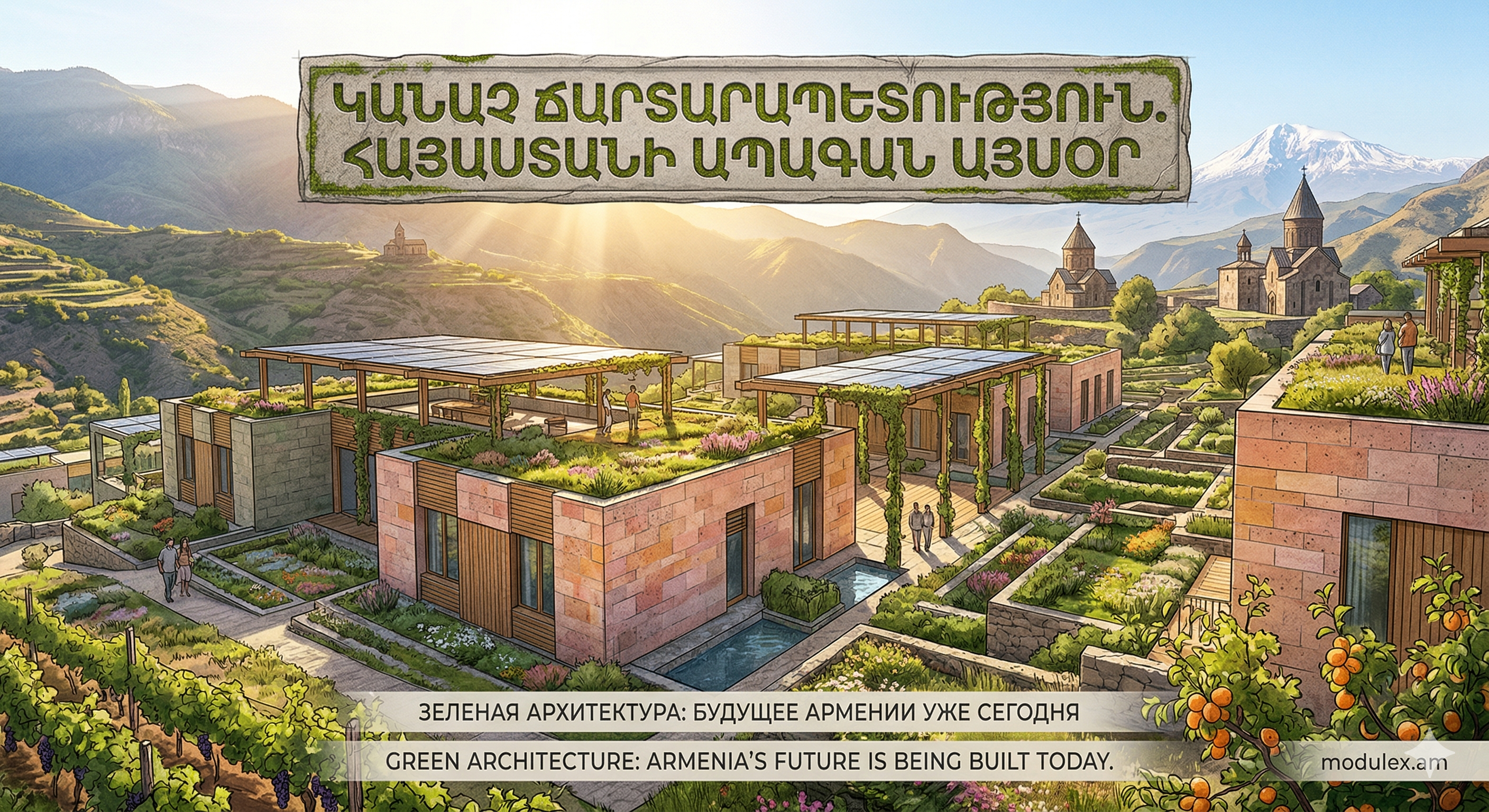
Green Architecture: Armenia’s Future is Being Built Today
The face of Armenia's cities is changing. Green architecture is no longer just a trend, but a real revolution in our construction culture. It is a philosophy where buildings do not fight nature but become a harmonious part of it. What makes a building "green"? Energy Efficiency: Using light shelves and solar tunnels to maximize natural light. Resource Management: Smart water-saving systems. Eco-friendly Materials: Using clean, non-toxic building materials. Landscape Integration: Construction that prevents soil erosion and preserves the natural environment. Armenia is taking firm steps in this direction: since 2022, mandatory energy efficiency assessment standards have been in place. We are striving for the A+ rating, ensuring lower utility bills and a healthy living environment for everyone.
April 8, 2026
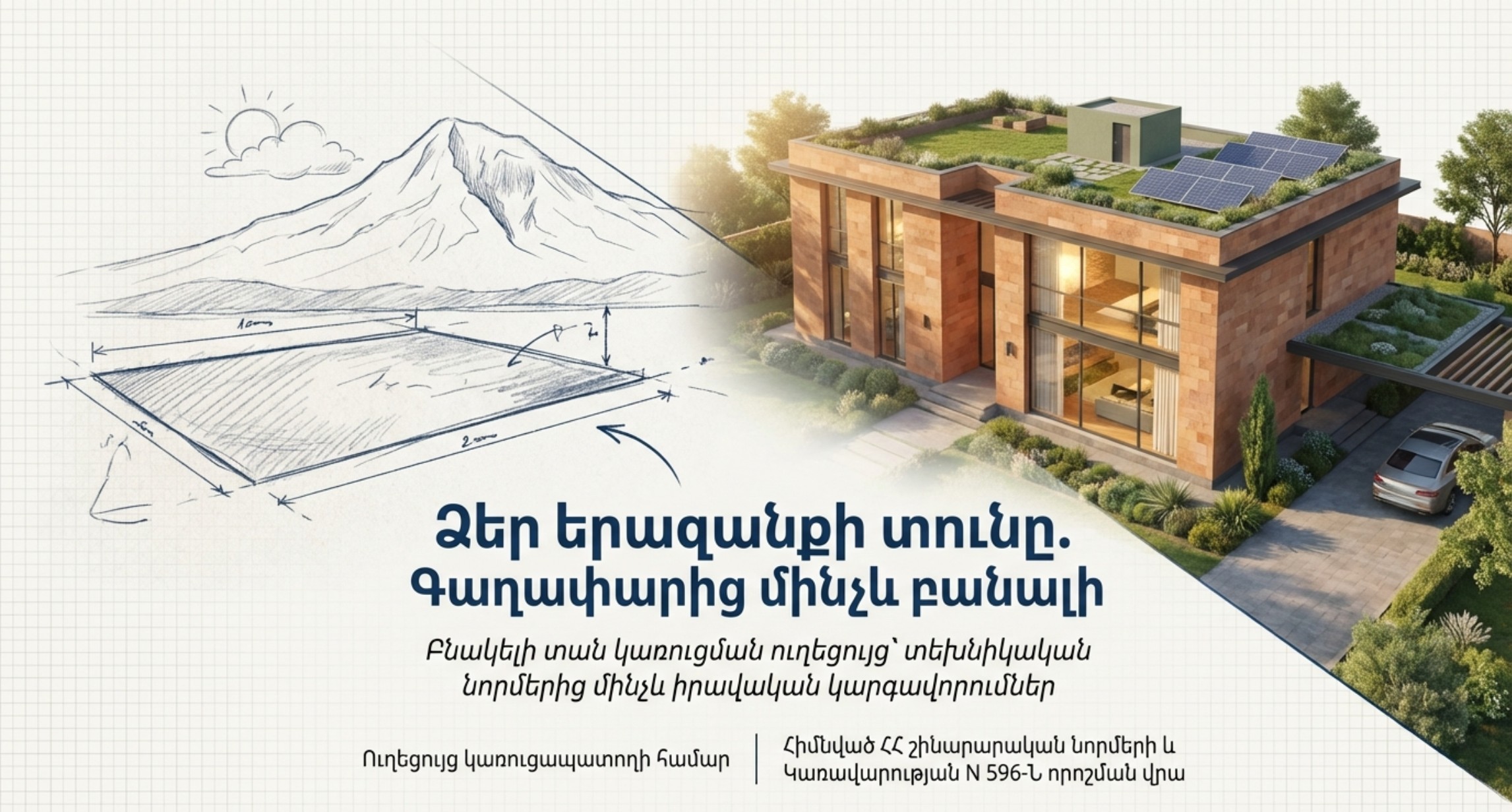
Simplified procedure for building houses in Armenia
Steps required to build an individual residential house up to 300 sqm (Risk Category II) in Armenia:1. Preparation and Site Study Mandatory engineering-geological study to determine the foundation type (based on the seismic zoning map).For sloping terrains, providing retaining walls and drainage systems.Orienting the long facades of the house to the south to maximize the use of solar heat in winter.2. Design and Documentation (Simplified Procedure) Applying to the municipality to obtain an Architectural-Planning Assignment (APZ).Drafting the architectural-construction project.For houses not exceeding 300 sqm, state expertise is not required; the designer's warranty is sufficient.The construction permit is issued simultaneously with the project within a 3-5 day period.3. Construction Organization Site setup: fencing, safety zones, and material storage.Technical supervision of construction quality by a licensed person (or contractor's warranty for Category II risk objects).Maintaining worker safety norms and mandatory installation of fire alarm systems and smoke detectors.Waste management: sorting construction debris (concrete, metal, plastic) and disposal.4. Completion and Documentation Collecting executive acts for hidden works compiled during the construction process.Applying to the municipality to document the completion of construction and obtain a completion act (occupancy permit). Unfinished construction after the permit expiration date can cause issues.Property measurement and state registration at the Cadastre Committee.
Welcome
Enter your details to log in or start without registration.